
Supported content ingestion
Bring in text, PDF with readable text, email, Outlook attachments, RTF, EPUB, OpenDocument and Office files.
AI knowledge management
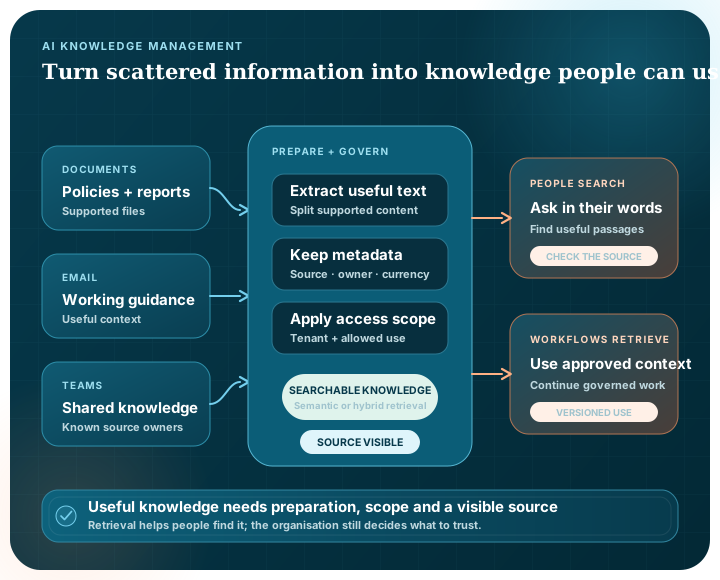
Important information is often spread across documents, email and different teams. Pūnaha prepares supported content for semantic and hybrid search, then lets people and versioned workflows use what they find.
Knowledge foundation
Bring in text, PDF with readable text, email, Outlook attachments, RTF, EPUB, OpenDocument and Office files.
Maintain separate knowledge databases for different tenants and operational settings.
Find material through meaning, exact language or a combination suited to the use case.
Use approved knowledge as context in different workflows without tying it to a single model.
An important distinction
Pūnaha can retrieve content. Your organisation still decides which sources are current, trustworthy and allowed to guide the work.
A useful implementation identifies source owners, currency expectations, access boundaries and the workflows allowed to use each collection.
Pūnaha provides the retrieval and workflow building blocks. Governance decisions remain visible responsibilities rather than hidden assumptions.
Know who is responsible for the source and its quality.
Set expectations for when important content should be reviewed.
Decide which people and workflows may use each knowledge collection.
Pūnaha focuses on making supported content searchable and useful to AI workflows. It is not presented as a replacement for every source system or records management responsibility.
Supported extraction includes text, PDFs with readable text, email, Outlook attachments, RTF, EPUB, OpenDocument and Office files. OCR for image-only PDFs is not currently claimed.
Yes. Knowledge retrieval and model deployments are separate workflow concerns, allowing a workflow to use the model selected for that task.
Show us the source types they search, the words they use and what they need to do once they find the answer.